
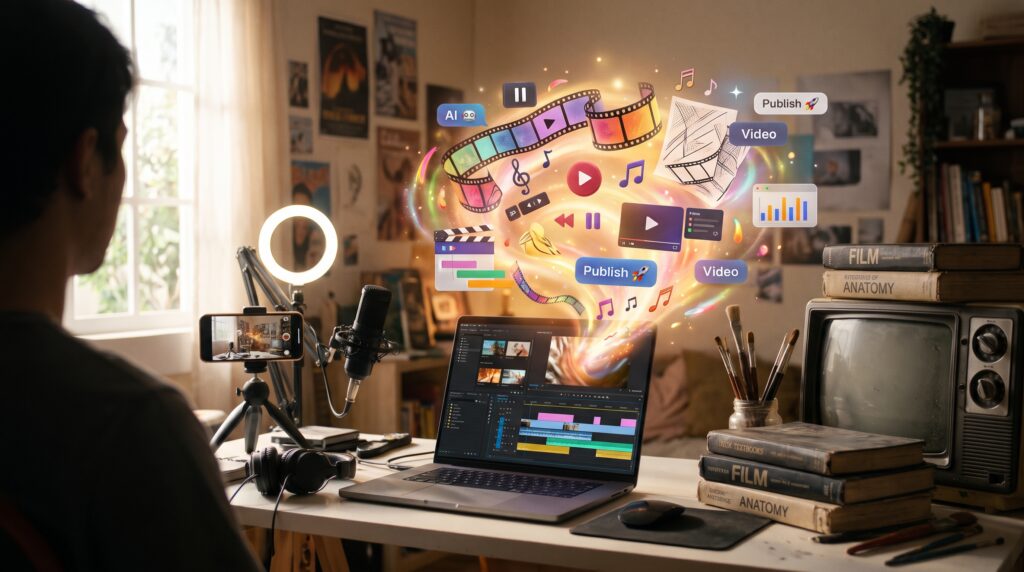
Every few months, a familiar debate erupts across the internet, television studios, and creative circles. Usually, it starts with someone complaining about the state of modern entertainment. A traditional artist, a seasoned critic, or a veteran of the old media establishment points a finger at the new generation of creators, those making short-form videos, digital sketches, indie web series, or experimental music from their bedrooms, and delivers a familiar sermon: "Real art requires years of grueling study, endless sacrifice, and decades of breaking your back before you earn the right to be seen."
On the surface, this sounds noble. Who could possibly argue against hard work, dedication, and mastery? We are raised on stories of the tortured genius, the classical violinist practicing twelve hours a day until their fingers bleed, or the filmmaker spending twenty years carrying cables on movie sets before being allowed to touch a camera.
Yet, when we look closer at this narrative, especially when it is weaponized to gatekeep modern television, digital video, and artistic expression, something far less noble begins to show through the cracks. Beneath the surface of "protecting the craft," there is often a quiet, insidious form of resentment. It is the unspoken demand that says: "I had to suffer to get here, so you must suffer even more before you are allowed to take a single step."
At MYETV, where we have spent over a decade building an open ecosystem for independent television, digital creators, and technological innovation, we believe it is time to challenge this dogma. Art is not a prison sentence, creativity is not a hazing ritual, and modern tools, from smartphones to Artificial Intelligence, are not the enemies of human expression. They are the exact opposite: they are the keys that unlock the doors for millions of people who were previously told they didn't belong.
Il chirurgo vs. Il narratore: comprendere la differenza tra precisione ad alto rischio ed espressione artistica
Before going any further, let us clear up a very common misunderstanding. Critics of modern creative accessibility love to use false equivalencies. They will say, "If you wouldn't let an untrained amateur fly a commercial airplane or perform open-heart surgery, why should we celebrate someone who hasn't spent ten years in conservatory or film school?"
The answer is remarkably simple: because a bad video never killed anyone on an operating table.
When we talk about medicine, civil engineering, aviation, or electrical infrastructure, years of rigorous, standardized, and unforgiving study are non-negotiable. If a surgeon makes an impulsive, unstudied cut, a human life is lost. If an architect miscalculates the load-bearing capacity of a bridge, dozens of people are in danger. In these fields, eliminating errors through years of repetitive, disciplined training is a moral and practical necessity. You cannot "improvise" brain surgery, and nobody wants a pilot who relies on "happy accidents" during a thunderstorm.
Art, television, music, and storytelling operate under completely different laws of physics.
Art is not an exact science designed to prevent physical catastrophe; it is a human language designed to provoke emotion, spark curiosity, entertain, comfort, or make someone think. When you apply the rigid, life-or-death standards of medical school to the act of making a video, writing a song, or launching an independent web channel, you fundamentally misunderstand what art is for.
Tuttavia, i gatekeeper tradizionali continuano a trattare le industrie creative come se fossero gilde chiuse con rigide quote di apprendistato. Insistono nel dire che esiste solo un percorso valido: la lunga e agonizzante scalata di una scala che per caso controllano. Facendolo, confondono resistenza tecnica con valore artistico. Dimenticano che i movimenti culturali più amati dalla storia sono stati quasi sempre avviati da esterni che non seguivano le regole del manuale.
L'invidia nascosta dietro "Devi faticare duramente"
Perché alcuni professionisti affermati si arrabbiano così tanto quando un giovane creatore, usando una configurazione semplice e un'idea fresca, riesce a catturare il pubblico senza passare attraverso venti anni di fatiche tradizionali?
To understand this, we have to talk honestly about human psychology. When someone spends a massive portion of their youth enduring financial instability, rigid academic drills, toxic workplace hierarchies, and constant rejection just to earn a seat at the table, they naturally develop a deep emotional attachment to their own suffering. That suffering becomes their badge of honor. It is how they justify the years they lost.
Then, the world changes. Technology evolves. Suddenly, a twenty-year-old with a laptop, a free editing suite, and an internet connection can reach an audience that used to require a multi-million-dollar broadcast network- [Network of Contents: is the channel in which owners can post their content and the audience can see the contents posted by the owners] - . A creator who spends one or two focused hours a day experimenting with visual ideas can build a loyal community without ever asking permission from a television executive or a record label.
For those who endured the old system, this feels deeply unfair. Instead of celebrating the fact that the next generation doesn't have to go through the same meat grinder, a defensive reaction kicks in. The narrative shifts from "Look how much easier it is to create now!" to "If you haven't broken your back like I did, your work isn't real art."
Questa mentalità non è solo ingiusta, è attivamente pericolosa.
When society tells young people that they must grind themselves into dust, repeat the same mechanical exercises until they are numb, and sacrifice their mental and physical health before they are allowed to share their voice, we don't produce better art. Instead, we produce burnout, anxiety, and silence. Countless brilliant minds give up before they even begin because they are convinced they don't have the ten spare years or the financial privilege required to "pay their dues." Some push themselves so hard trying to meet an imaginary standard of perfection that they lose all joy in the very thing they loved, and in the worst cases, they destroy their well-being chasing validation from people who will never be satisfied anyway.
True mentorship never demands that the student suffer as much as the teacher. A good builder invents better tools so the next generation can build higher, faster, and with less physical strain. Only an insecure gatekeeper wants everyone else to carry bricks by hand forever just because they had to.
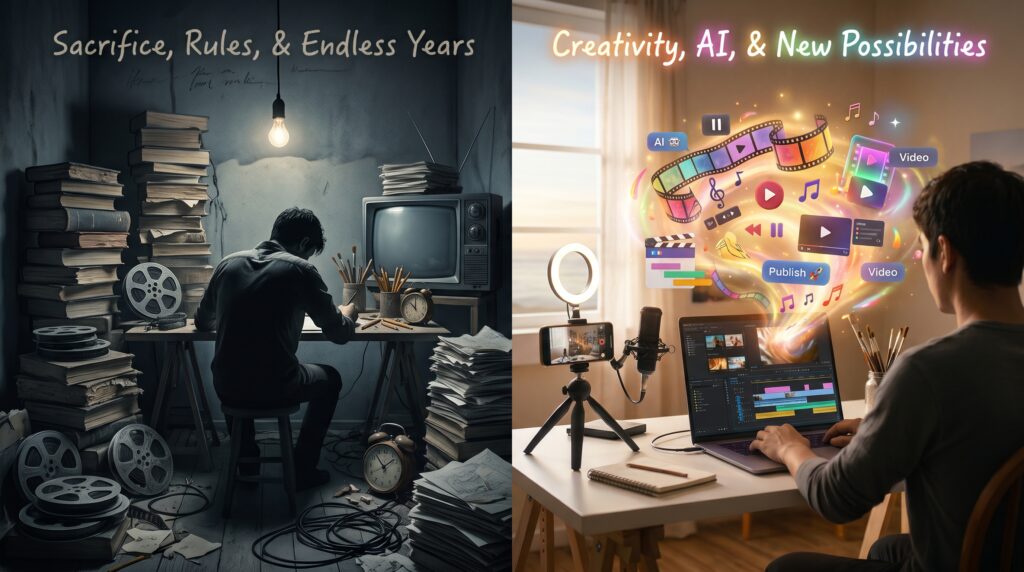
La bellezza dell'imperfezione: perché gli "Errori" sono spesso l'anima dell'arte
Another major flaw in the "years of grueling practice" philosophy is its obsession with flawless execution. Traditional training often focuses on repeating an action thousands of times until every trace of error is eliminated. Play the scale until every note is mathematically even. Edit the scene until every transition follows the textbook rule. Speak with the exact same broadcast cadence as every anchor before you.
The problem? When you remove every single imperfection from a piece of work, you often remove its humanity along with it.
Think about the moments in television, cinema, and music that actually stay with you for years. Are they the sterile, hyper-polished corporate productions where every hair is in place and every line was rehearsed fifty times? Almost never. What we remember, what makes us laugh, cry, or feel an immediate connection, is the raw, unscripted moment:
Nell'arte, un errore non è un fallimento; è un'impronta digitale. È la prova che un essere umano reale era presente in quel momento, facendo scelte in tempo reale invece di eseguire una routine pre-programmata.
When people are terrified of making mistakes because they believe they aren't "qualified" yet, they freeze. They spend months planning a single video that never gets uploaded. They write scripts they never record. They sit on ideas that could have brightened someone's day because they think they need another five years of preparation before they are "ready."
La verità è che si impara molto di più pubblicando dieci cose imperfette e vedendo come reagiscono le persone reali, rispetto a quanto si potrà mai imparare praticando in isolamento per cinque anni cercando di raggiungere una perfezione mitica.
Un mondo pieno di scorciatoie (e perché sceglierle è intelligente, non pigro)
There is a strange stigma around the word "shortcut." In traditional culture, taking a shortcut is equated with cheating, laziness, or cutting corners. Yet, in every other area of human progress, finding a shorter, smarter path to a goal is celebrated as innovation.
Imagine telling a writer today that using a word processor is "cheating" because real authors write with a feather quill by candlelight, or telling a photographer that using autofocus is "lazy" because true artists calculate focal distance manually with a measuring tape. It sounds absurd, yet that is the exact argument people make when they dismiss modern creative workflows.
Oggi, esistono decine di percorsi legittimi ed entusiasmanti nel mondo artistico e televisivo che non esistevano nemmeno dieci anni fa:
Taking a faster road does not diminish the destination. If two travelers want to reach the top of a mountain to admire the view, and one spends three weeks hacking through dense thorny bushes while the other takes a newly built trail in three hours, they both see the exact same sunrise. The view isn't "less real" for the person who took the trail, they just have more energy left to enjoy it and build something once they arrive.
Come l'intelligenza artificiale cambia l'equazione: la creatività in 1 o 2 ore al giorno
Nessun luogo vede questo cambiamento essere più drammatico, o più frainteso, che nell'ascesa di Intelligenza Artificiale.
Whenever a new creative technology arrives, the reaction from the establishment follows a predictable script. When photography was invented in the 19th century, painters declared it the "death of art." When synthesizers and drum machines appeared in the 1970s and 80s, traditional musicians insisted that pressing buttons wasn't "real music." When digital non-linear editing replaced physical film splicing, veteran editors claimed the craft was ruined.
Oggi, l'IA si trova esattamente nello stesso posto difficile. E proprio come prima, le critiche più forti spesso trascurano la realtà più trasformativa: L'IA riduce drasticamente la barriera tra avere un'idea e darle vita.
Pensa a ciò che impediva a una persona comune di creare arte audiovisiva:
- Avevi un concetto brillante per un racconto di fantascienza, un documentario storico o uno sketch di commedia satirica, ma non avevi 50.000 dollari per assumere attori, affittare uno studio, acquistare telecamere cinematografiche e pagare una casa di post-produzione.
Con i flussi di lavoro assistiti dall'IA di oggi, combinati con l'editing leggero e le piattaforme di trasmissione indipendenti, quell'intera equazione si ribalta.
In una o due ore focalizzate al giorno, una singola persona può ora:
- Brainstorming e perfezionamento di un concetto narrativo, scambiando idee finché la struttura non è coerente.
L'IA sostituisce il gusto umano, l'umore, l'empatia o la visione? Affatto. Se dai agli stessi strumenti di IA a dieci persone, nove di esse potrebbero produrre rumore dimenticabile, mentre la decima persona, quella con un punto di vista distinto, un acuto senso del tempismo e un autentico nucleo emotivo, creerà qualcosa di indimenticabile.
L'IA non elimina l'artista; elimina la fatica. Rimuove i colli di bottiglia meccanici che costringevano i creatori a dedicare il 90% del loro tempo a lavori tecnici noiosi e solo il 10% all'immaginazione vera. Ora, puoi dedicare il 90% della tua energia a ciò che vuoi dire e come vuoi che le persone si sentano, mentre gli strumenti ti aiutano a gestire il lavoro pesante.
Per qualcuno che ha solo un'ora dopo il lavoro, o uno studente che deve conciliare le lezioni, o un genitore che cresce figli, questo non è "barare". È liberazione. Significa che l'arte non è più il parco giochi esclusivo di persone che hanno tempo libero illimitato, genitori ricchi o sostegno istituzionale.
Ridefinire la televisione e la cultura per tutti
Perché questa filosofia è così importante per noi a MYETV?
When traditional television was born in the twentieth century, it was built on scarcity. There were only a handful of frequencies available, broadcasting equipment cost millions, and a tiny circle of executives decided what millions of people were allowed to watch every evening. That scarcity naturally bred elitism. If only fifty shows could air across an entire country, gatekeepers had to invent strict rules to keep almost everyone out.
The internet shattered that scarcity, and modern independent platforms are finishing the job. Television is no longer a one-way box sitting in the corner of the living room controlled by a few giant corporations. Today, television is an open canvas. Anyone can launch a channel, curate a thematic stream, experiment with formats, mix live broadcasts with on-demand shorts, and build a direct relationship with viewers around the world.
Se portiamo con noi la vecchia mentalità elitaria "devi soffrire per dieci anni prima di essere degno" in questa nuova era, sprechiamo la più grande opportunità creativa nella storia umana.
Non dovremmo chiedere ai creatori:
- "Dove hai studiato?"
- "Quanti anni hai trascorso come assistente non retribuito?"
Invece, dovremmo chiederci:
- "Questo mi fa provare qualcosa?"
- "Questo mi ha fatto ridere, pensare o vedere il mondo da un'angolazione leggermente diversa?"
A message to anyone holding back: start where you are, with what you have
If you are reading this and you have been sitting on an idea, whether it is a video series, a short documentary, a comedy channel, a musical experiment, or a visual blog, take this as your permission slip to ignore the gatekeepers.
You do not need to wait until you have mastered every technical manual. You do not need to sacrifice your health, your sleep, or your sanity on the altar of "paying your dues." You do not need to apologize for using smart tools, modern shortcuts, or Artificial Intelligence to turn a one-hour daily session into something real and shareable.
Accetta i tuoi lati più grezzi. Mantieni i momenti che sembrano umani. Lascia che i tuoi primi video siano un po' disordinati, sperimentali e non rifiniti, perché quella energia grezza è spesso proprio la cosa che spinge le persone a smettere di scorrere e prestare attenzione.
Art belongs to the curious, the playful, and the brave, not to those who suffered the longest. Pick up the tools in front of you, spend an hour creating something today, and put it out into the world. You might be surprised by how many people were waiting to see exactly what you have to offer.
